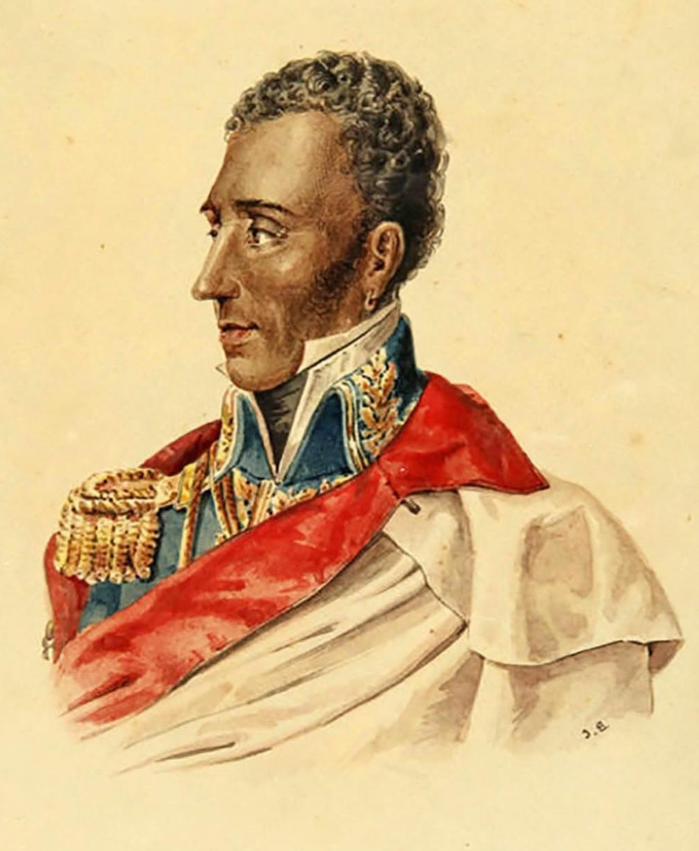
Jean-Pierre Boyer
Jean-Pierre Boyer was a Haitian statesman and military leader who served as president of Haiti from 1818 to
1843. He is best known for unifying the northern and southern parts of Haiti and later occupying Santo Domingo (present-day Dominican Republic), creating a single political entity on the island of Hispaniola from 1822 to 1844.
Key facts
- Born: February 15, 1776, in Port-au-Prince, Saint-Domingue (now Haiti)
- Died: July 9, 1850, in Paris, France
- Role: President of Haiti
- In office: 1818–1843
Major achievements and actions
- Unified Haiti: After years of division following independence, Boyer brought northern Haiti under southern control in 1820.
- Occupied Santo Domingo: In 1822, he annexed the eastern side of Hispaniola, ruling the whole island for over two decades.
- France indemnity agreement (1825): Boyer negotiated recognition of Haitian independence from France, but Haiti agreed to pay a massive indemnity to former French slaveholders. This debt heavily burdened Haiti’s economy for generations.
- Land policies: He promoted agricultural production through systems that often restricted peasant mobility and labor freedom.
Historical significance
Boyer remains a controversial figure:
- In Haiti, some view him as a nation-builder who preserved independence and unity.
- In the Dominican Republic, his rule is often remembered negatively because of political control from Port-au-Prince and cultural tensions during the occupation period.
His presidency was eventually overthrown in 1843 after economic troubles and political opposition grew.
elaborate more of what happen in the Dominican Republic under Boyer presidency
The period of Jean-Pierre Boyer in what is now the Dominican Republic (1822–1844) is one of the most debated periods in Caribbean history. Different historians emphasize different aspects, but several major developments are generally agreed upon.
Why Boyer occupied Santo Domingo
When Boyer entered Santo Domingo in February 1822, the eastern side of the island had only recently declared independence from Spain. Boyer feared that Spain, France, or another European power might use the eastern territory as a base to threaten Haiti. His goal was to unite the entire island under one government and protect Haitian independence.
Positive changes under Boyer
- Abolition of slavery
One of Boyer’s most significant actions was the abolition of slavery in the eastern part of the island. Although slavery was not as widespread there as it had been in the French colony of Saint-Domingue, thousands of enslaved people gained legal freedom. This policy was welcomed by many free people of color and enslaved persons.
- Elimination of legal racial distinctions
The Haitian government abolished many colonial-era racial privileges and restrictions inherited from Spanish rule. Haiti’s constitution recognized all citizens as legally equal regardless of race.
- End of the old colonial system
Boyer attempted to replace Spanish colonial institutions with a centralized republican government modeled after Haiti’s political system.
Why many Dominicans became dissatisfied
- Heavy centralization from Port-au-Prince
The eastern territory lost much of its local autonomy. Santo Domingo was governed as part of the Haitian Republic, and important decisions were made in Port-au-Prince. Many Dominican elites felt politically marginalized.
- Land confiscations
Large amounts of land owned by the Church, absent landowners, and some wealthy families were confiscated. While some of these measures were intended as land reform, they created strong opposition among landowners and the Catholic Church.
- The Rural Code and forced labor practices
Boyer attempted to increase agricultural production through the Rural Code. Many farmers were required to remain tied to agricultural work, and corvée-style labor obligations were imposed for public works and roads. These policies became deeply unpopular among both Haitians and Dominicans.
- Conflict with the Catholic Church
The Catholic Church lost lands and privileges. Some clergy left the country, church properties were seized, and relations between the government and religious authorities deteriorated. Since Catholicism was central to Dominican society, this generated significant resentment.
- Language and cultural tensions
Spanish remained the language of the population, but French and Haitian administrative practices dominated government affairs. Some policies sought to reduce the role of Spanish in official administration and education. Many Dominicans viewed this as a threat to their cultural identity.
- Tax burdens
To help Haiti pay the enormous indemnity imposed by France in 1825, taxes increased throughout the republic. Both Haitians and Dominicans felt the economic burden.
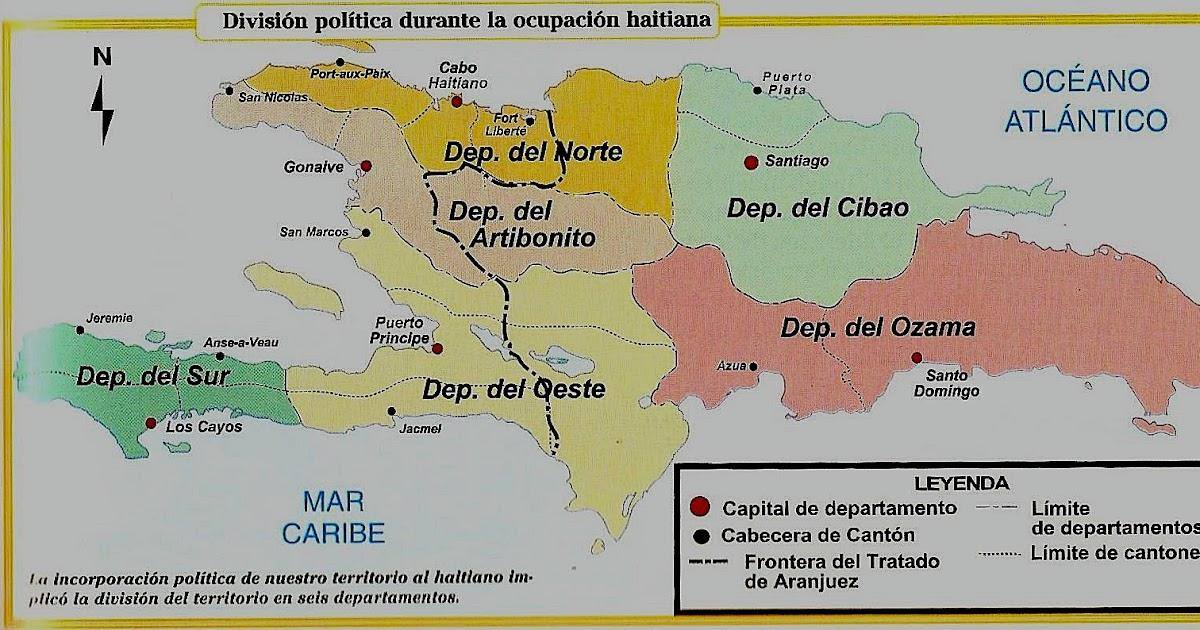
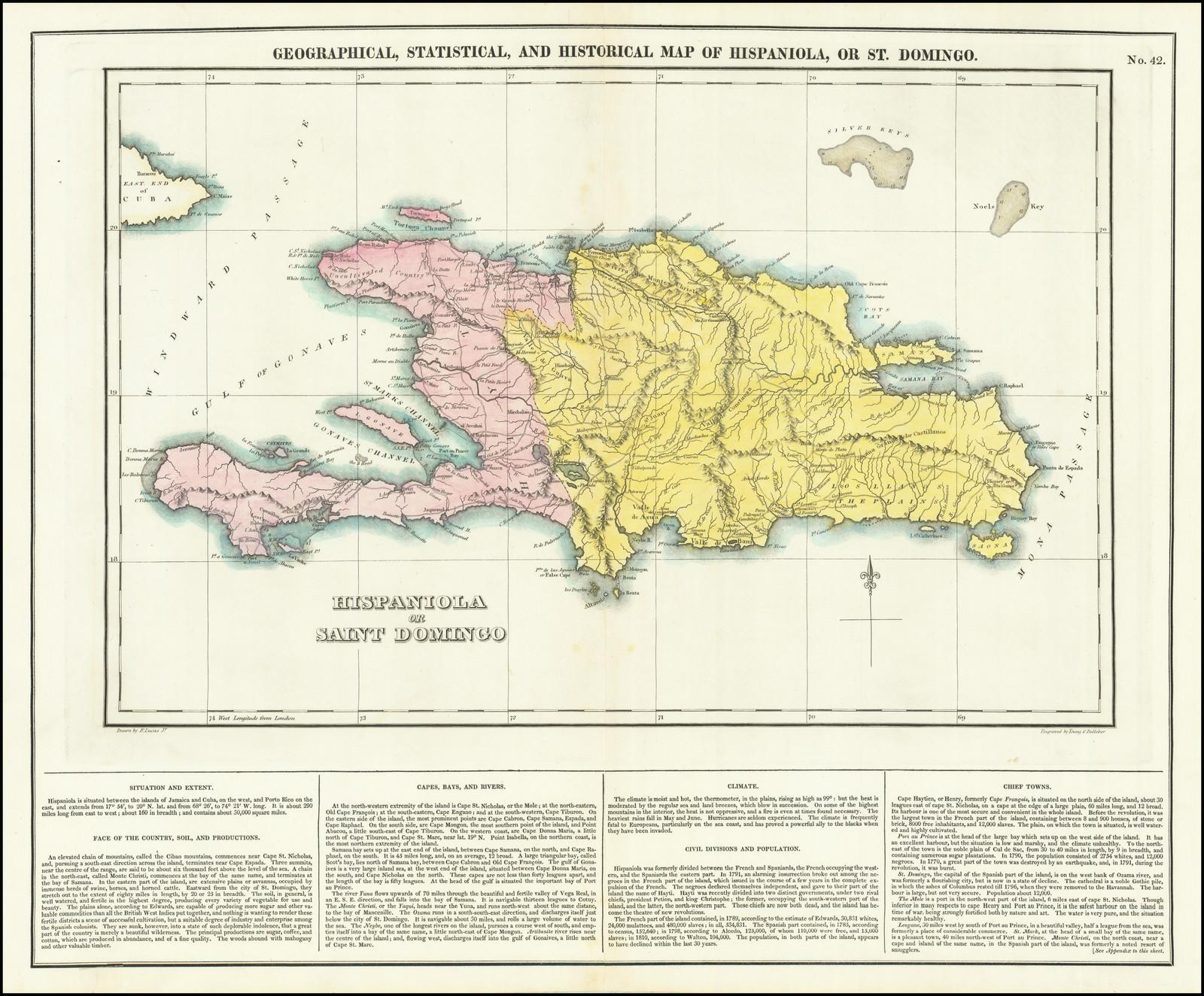
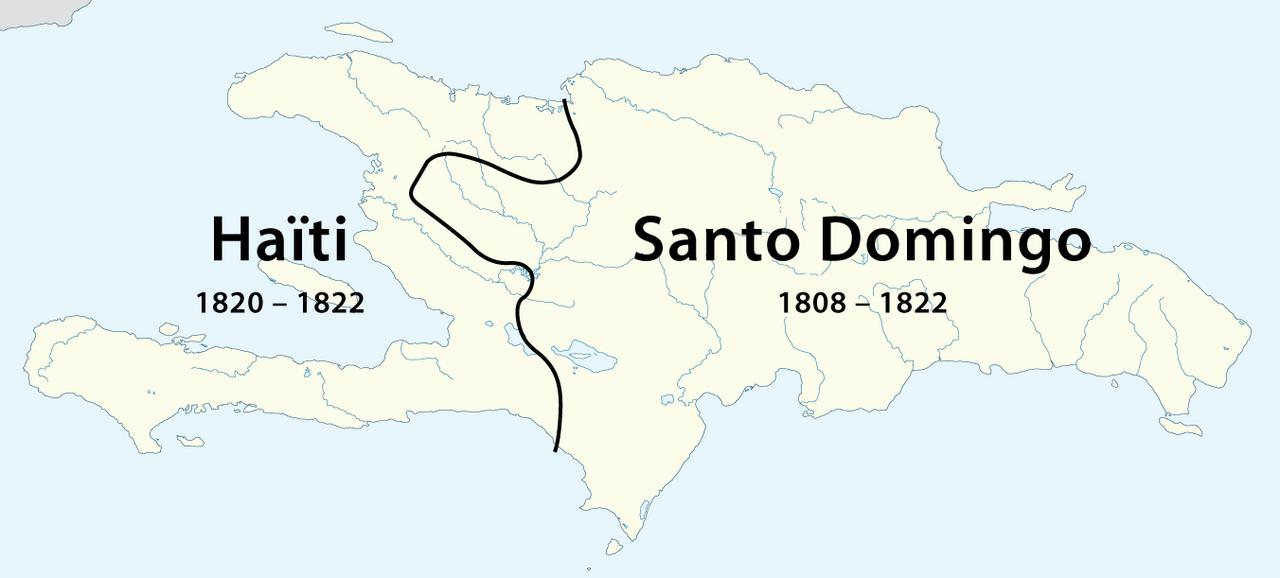
What happened in 1821–1822?
The key point is that the eastern part of Hispaniola was not yet the modern Dominican Republic. It was the Spanish colony of Santo Domingo.
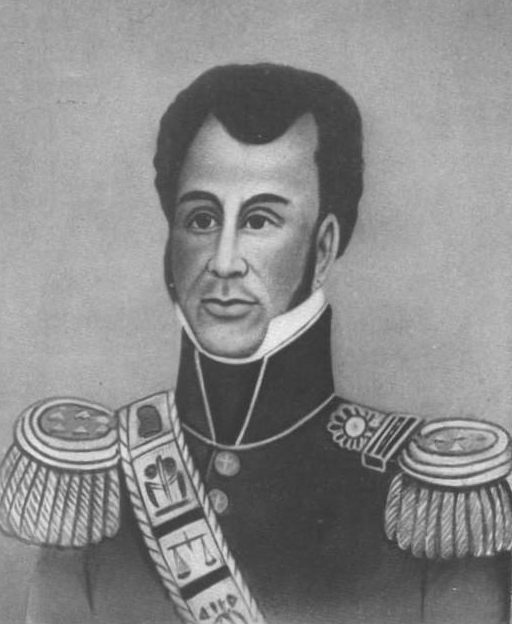
On December 1, 1821, José Núñez de Cáceres declared independence from Spain and established a short-lived state generally known as Spanish Haiti. His government hoped to obtain protection from or eventually associate with Gran Colombia, rather than become part of Haiti.
But Núñez de Cáceres had a serious problem: his new government had very little military strength and did not receive the outside support it expected.
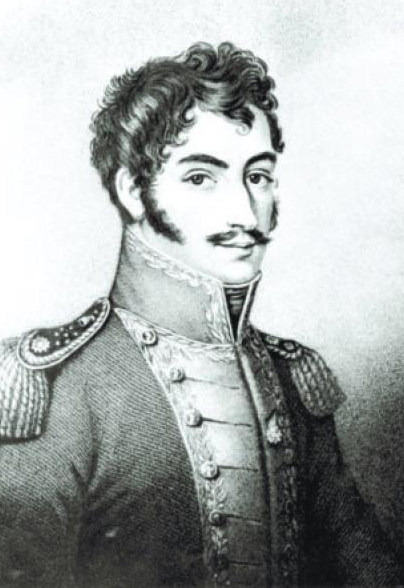
At the same time, Haiti under President Jean-Pierre Boyer controlled the western portion of the island.
Did Núñez de Cáceres ask Boyer to come and occupy Santo Domingo?
Not exactly.
This is where historical accounts can become misleading.
Núñez de Cáceres did not initially ask Boyer to invade or annex Santo Domingo. His independence project was actually intended to separate the territory from Spain and seek protection/association elsewhere.
Boyer, meanwhile, had already decided that he wanted to bring the Spanish side of the island under Haitian authority.
On January 11, 1822, Boyer wrote to Núñez de Cáceres making his intentions clear. He essentially argued that there could not be two separate governments on the island and announced that he was coming east with a large military force.
Boyer reportedly described his planned entry not as a conquest but as an effort to act as a “pacifier and conciliator.” However, he also made clear that he was coming with overwhelming military force.
So there was a strong element of coercion.
But there WAS a request for Haitian protection
This is the fascinating part.
When Boyer arrived in Santo Domingo, Núñez de Cáceres ultimately surrendered the government to him.
On February 9, 1822, Boyer formally entered Santo Domingo.
Núñez de Cáceres handed over governmental authority and asked Boyer to protect and defend the people of the former Spanish colony. A Dominican account of the event records that Núñez de Cáceres presented Boyer as a protector rather than a conqueror and asked him to safeguard the population.
Núñez de Cáceres did ultimately accept Haitian protection and transfer authority to Boyer, but this should not be confused with an original invitation for Boyer to invade and annex Santo Domingo.
That’s an important historical distinction.
Why did Boyer want to take Santo Domingo?
There were several reasons.
- Security of Haitian independence
This was probably one of Boyer’s most important strategic concerns.
Haiti had achieved independence from France in 1804, but Haitian leaders remained deeply concerned that European powers could use the eastern part of Hispaniola as a base for an attack or attempt to restore colonial rule.
Spain still claimed Santo Domingo.
Boyer therefore believed that leaving the eastern part of the island under another government could create a potential security threat.
The U.S. State Department’s historical documentation explains that Boyer wanted to incorporate the Spanish side partly because the political instability in Spain meant that Santo Domingo could potentially become vulnerable to foreign intervention.
- Haiti’s leaders viewed the entire island as strategically connected
Boyer inherited a long-standing Haitian political tradition that regarded control of the entire island as important.
The Haitian Constitution itself provided a framework for incorporating the eastern territory.
In his proclamation of February 9, 1822, Boyer presented the union as the completion of the unification of the island and emphasized that Haiti was a nation without slavery.
- Ending slavery in Santo Domingo
This is another very important factor.
Slavery still existed in the Spanish colony.
Haiti, since the Haitian Revolution, represented a society founded on the destruction of slavery.
Boyer therefore presented the incorporation of Santo Domingo partly as the extension of Haitian freedom.
Some residents of Santo Domingo—particularly among free people of color and groups opposed to the existing social order—were receptive to union with Haiti because Boyer promised emancipation and land opportunities.
- There was genuine pro-Haitian sentiment in parts of Santo Domingo
This is something that is sometimes forgotten when the story is presented simply as “Haiti invaded the Dominican Republic.”
The population of Santo Domingo was not politically united.
There were different factions.
Some favored:
- independence;
- association with Gran Colombia;
- continued ties with Spain;
- union with Haiti.
The U.S. State Department’s historical account specifically notes that some Dominican Creoles favored annexation to Haiti, while others favored association with Gran Colombia.
Therefore, Boyer was able to exploit significant political divisions in Santo Domingo.
Did the people of Santo Domingo welcome Boyer?
Some did; others did not.
This is another point where the history needs nuance.
When Boyer arrived in February 1822, he did not encounter a large-scale military battle for Santo Domingo.
Núñez de Cáceres’s government lacked the military strength necessary to resist Haiti.
On February 9, members of the Santo Domingo municipal government received Boyer, and Núñez de Cáceres formally transferred authority.
There were also Dominican communities and officials who had already aligned themselves with Boyer.
But that does not mean that all Dominicans wanted Haitian rule.
There was substantial opposition, and resentment toward Haitian rule increased during the following two decades.
“In 1821, José Núñez de Cáceres declared Santo Domingo independent from Spain but was unable to secure the foreign support needed to defend the new state. President Jean-Pierre Boyer, seeking to secure Haiti’s independence, prevent potential foreign intervention, abolish slavery in the eastern part of the island, and unite Hispaniola under one government, marched into Santo Domingo in February 1822. Although some Dominican leaders and communities favored Haitian protection or union with Haiti, Boyer’s decision to bring the territory under Haitian rule was ultimately backed by overwhelming military force.”
And there is an especially interesting detail about Núñez de Cáceres
When Boyer entered Santo Domingo, Núñez de Cáceres did not portray him simply as an invading conqueror.
In his ceremonial address, Núñez de Cáceres asked Boyer to protect and defend the population and referred to him in terms of a protector, brother and friend.
But this should be understood in its context: Núñez de Cáceres had essentially run out of options. His new independent government had failed to obtain the external support it needed, and Boyer was arriving with approximately 12,000 troops.
So the transfer of authority was peaceful in Santo Domingo at the moment of occupation, but it occurred under the overwhelming presence of Haitian military power.
Why the occupation ended
By the 1840s, opposition to Boyer was growing on both sides of the island. In Haiti, Boyer was overthrown in 1843 after widespread dissatisfaction with his government. The political instability that followed weakened Haitian control of the east. Dominican nationalists led by Juan Pablo Duarte, Francisco del Rosario Sánchez, and Matías Ramón Mella organized the movement known as La Trinitaria. On February 27, 1844, the Dominican Republic declared independence from Haiti.
Historical perspective
Modern historians generally reject both extreme views that portray Boyer either as a liberator or solely as an oppressor. His rule brought important reforms, especially the abolition of slavery and legal racial equality, but it was also marked by centralized rule, economic pressures, cultural conflicts, and unpopular labor policies that ultimately fueled Dominican nationalism and the movement for independence.
In short, Boyer’s government left a mixed legacy: it ended slavery and unified the island politically, but many of its policies generated resistance that contributed directly to the birth of the Dominican Republic in 1844.