Citadelle Laferrière
The Fortress of Freedom and the Guardian of Haitian Independence
The Citadelle Laferrière, often called the Citadel of Haiti, is one of the greatest military fortresses ever
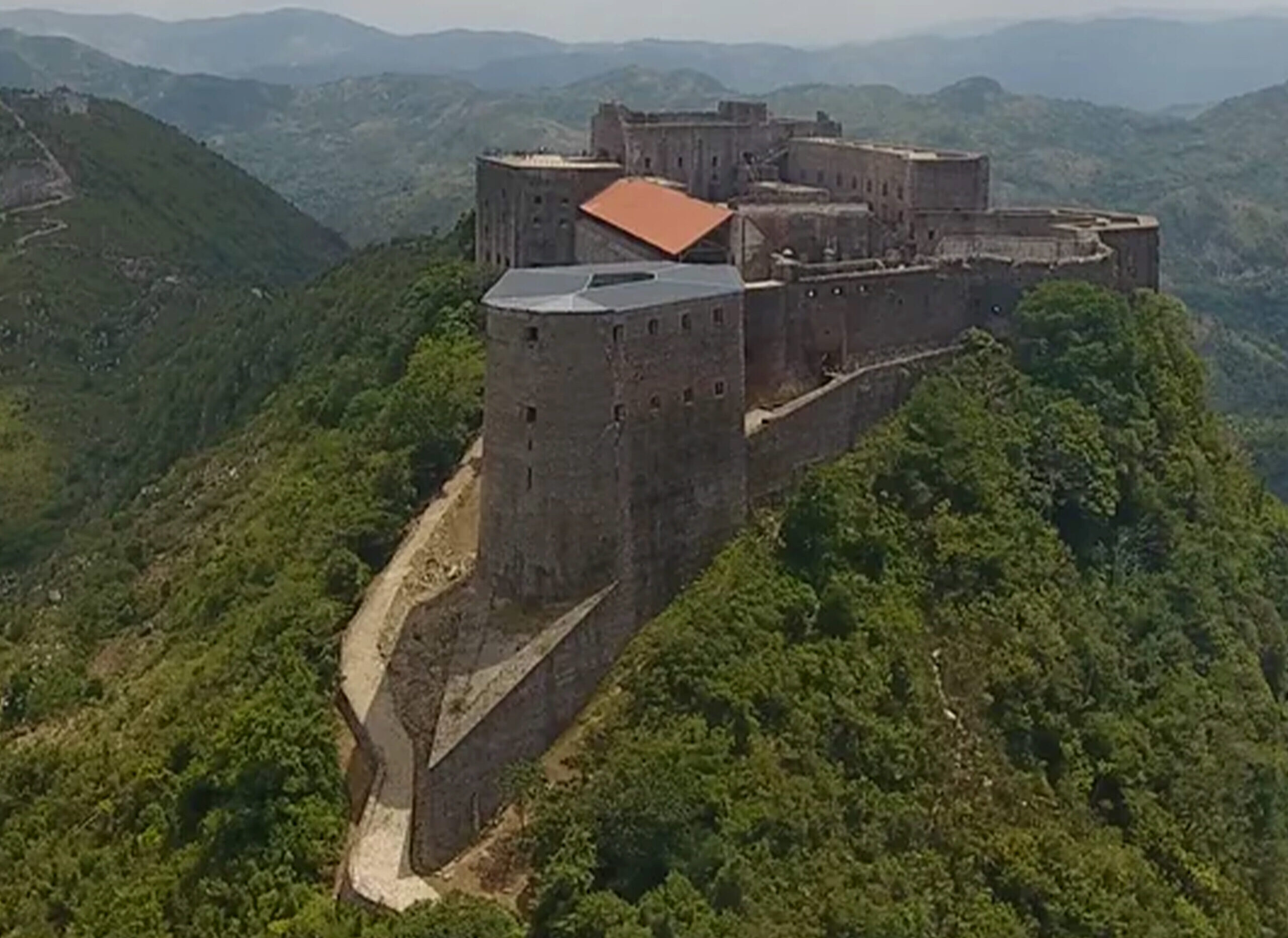
constructed in the Americas and one of the most remarkable symbols of freedom in world history. Rising majestically atop Bonnet à l’Évêque Mountain in northern Haiti, approximately 900 meters (3,000 feet) above sea level, the Citadelle stands as a powerful monument to the courage, determination, and vision of the Haitian people.
Built shortly after Haiti achieved independence, the Citadelle represents far more than a military fortress. It symbolizes a nation’s unwavering commitment to protecting the hard-won freedom secured through the Haitian Revolution. Today, it remains one of Haiti’s greatest national treasures and an enduring testament to the resilience of a people who overcame slavery and colonial domination.
A Vision of King Henri Christophe
Following Haiti’s declaration of independence on January 1, 1804, the country’s leaders faced an uncertain
future. Although Haiti had defeated Napoleon Bonaparte’s expeditionary army, many feared that France or another European power might attempt to restore colonial rule and slavery.
Recognizing this danger, Henri Christophe envisioned a fortress unlike any other, one capable of defending Haiti’s independence against any foreign invasion.
Construction of the Citadelle began in 1805 under Christophe’s leadership and continued for many years. Thousands of Haitian workers, engineers, artisans, and soldiers contributed to this extraordinary national project.
Christophe believed that protecting freedom required not only courage on the battlefield but also preparation, engineering, and long-term national planning. The Citadelle became the physical expression of that vision.
An Engineering Masterpiece
The Citadelle Laferrière is widely recognized as one of the most impressive feats of engineering in the Caribbean.
Its massive stone walls rise dramatically from the mountaintop, blending almost seamlessly into the surrounding landscape. The fortress covers an enormous area and was strategically designed to provide commanding views of northern Haiti and the Atlantic Ocean, allowing defenders to detect approaching enemy forces from miles away.
The Citadelle was constructed with remarkable attention to strength and durability. Its walls are several meters thick in places and were designed to withstand prolonged artillery attacks.
The fortress was equipped with:
- Hundreds of cannons collected from European armies.
- Large reserves of cannonballs and ammunition.
- Extensive food and water storage facilities.
- Living quarters for soldiers.
- Powder magazines.
- Defensive bastions positioned to protect every approach.
According to historical accounts, the Citadelle was capable of sheltering thousands of defenders and supporting them for extended periods if Haiti came under attack.
A Fortress That Never Had to Fight
Remarkably, the Citadelle was never attacked by a foreign army.
Its very existence served as a powerful deterrent. The fortress demonstrated Haiti’s determination to defend its independence at all costs and discouraged attempts to restore colonial rule.
For more than two centuries, the Citadelle has remained standing as one of the world’s most enduring symbols of national sovereignty.
A UNESCO World Heritage Site
In 1982, the UNESCO designated the Citadelle Laferrière, together with the nearby Palais Sans-Souci and the Ramiers Historic Site, as a World Heritage Site.
UNESCO recognized these monuments not only for their architectural excellence but also for their exceptional importance in the history of human freedom.
Today, visitors from around the world travel to northern Haiti to admire the Citadelle’s breathtaking architecture, panoramic mountain views, and profound historical significance.
A Symbol of Haitian Pride
For Haitians everywhere, the Citadelle Laferrière is much more than stone walls and cannons.
It represents:
- Freedom won through sacrifice.
- National independence.
- Courage against overwhelming odds.
- Unity in the defense of liberty.
- Visionary leadership.
- The resilience of the Haitian people.
The fortress stands as a reminder that freedom must always be protected and that future generations have a responsibility to preserve the legacy of those who fought to secure it.
A Legacy for Humanity
The Citadelle Laferrière is not only a Haitian treasure, it is part of the shared heritage of humanity.
Its story reminds the world that people who were once denied their freedom possessed the determination, intelligence, and engineering skill to build one of the greatest fortresses in history.
The Citadelle symbolizes the triumph of hope over oppression, courage over fear, and liberty over slavery.
More than two hundred years after its construction, it continues to inspire visitors from every continent who come to witness one of the greatest monuments ever built in defense of freedom.
Why Visit the Citadelle Laferrière?
A visit to the Citadelle is a journey into one of history’s greatest stories of courage and perseverance.
Visitors can:
- Explore one of the largest fortresses in the Americas.
- Experience breathtaking views of Haiti’s northern mountains.
- Learn about the Haitian Revolution and the nation’s independence.
- Discover the remarkable engineering achievements of the early nineteenth century.
- Visit nearby Palais Sans-Souci and the Ramiers Historic Site.
- Celebrate Haiti’s extraordinary contribution to world history.
Every stone of the Citadelle tells the story of a people who refused to surrender their freedom.
Citadelle Laferrière
Fortress of Freedom
Guardian of Independence
A Monument to Courage, Vision, and Liberty
1804 Heritage LLC
Preserving Haiti’s Legacy. Inspiring the World.