
Palais Sans-Souci
The Royal Heart of a New Nation
The Palais Sans-Souci was once the grand royal residence of Henri Christophe, one of the principal leaders
of the Haitian Revolution and later King of northern Haiti. Built in the early 19th century, the palace stood as a powerful symbol of Haiti’s sovereignty, ambition, and cultural pride following independence.
Located in the town of Milot, at the base of the mountains leading to the Citadelle Laferrière, the palace formed part of a larger defensive and administrative complex designed to secure the nation’s future.
A Vision of Power and Prestige
Construction of the palace began around 1810 under Christophe’s rule. Inspired by European architectural styles yet built by Haitian hands, Sans-Souci rivaled the grandeur of the great palaces of the world at the time.
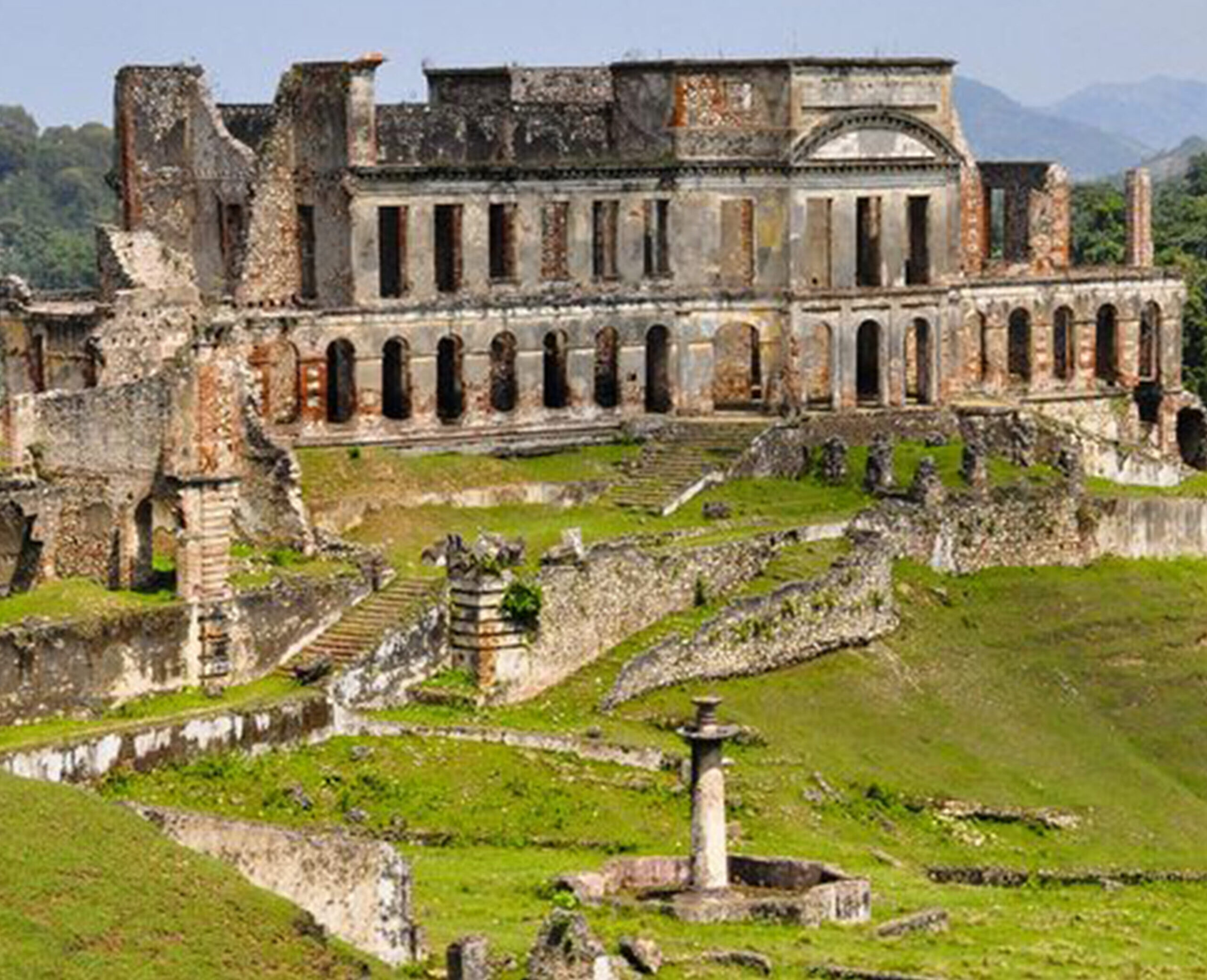
It featured:
- Grand staircases and terraces
- Elegant halls for royal ceremonies
- Lush gardens and courtyards
- Flowing fountains and decorative arches
The palace became the political and cultural center of Christophe’s kingdom.
Life at Sans-Souci
Sans-Souci was more than a residence, it was the seat of government and royal authority. It hosted official ceremonies, diplomatic meetings, and celebrations, reflecting Haiti’s emergence as a sovereign state on the world stage.
From this palace, Christophe governed northern Haiti while strengthening defenses, including the construction of the nearby Citadelle.
Destruction and Ruins
In 1820, following political unrest and the death of Henri Christophe, the palace was partially destroyed during a rebellion. Today, its ruins remain, silent yet powerful witnesses to a remarkable era in Haitian history.
Despite its destruction, the structure still conveys its former majesty through towering walls, sweeping staircases, and expansive courtyards.
A UNESCO World Heritage Treasure
The palace is part of the UNESCO World Heritage Site known as the Citadelle Laferrière and Sans-Souci Palace, recognized for its cultural and historical importance.
Symbolism and Legacy
The Palais Sans-Souci represents:
- Haiti’s assertion of independence and dignity
- The ambition of a newly free nation
- The complexity of leadership in the early years of independence
It stands today as a monument to both the glory and the challenges of Haiti’s early statehood.
Closing Reflection
Though now in ruins, the Palais Sans-Souci continues to inspire awe.
It reminds the world that Haiti, born from revolution, dared not only to be free, but to build, to lead, and to stand proudly among nations.
If you want, I can next:
- Combine Citadelle + Sans-Souci + Flag into a beautiful Gallery section layout
- Create a tourist guide page
- Or turn all your sections into a complete modern website design (with visuals and layout)