
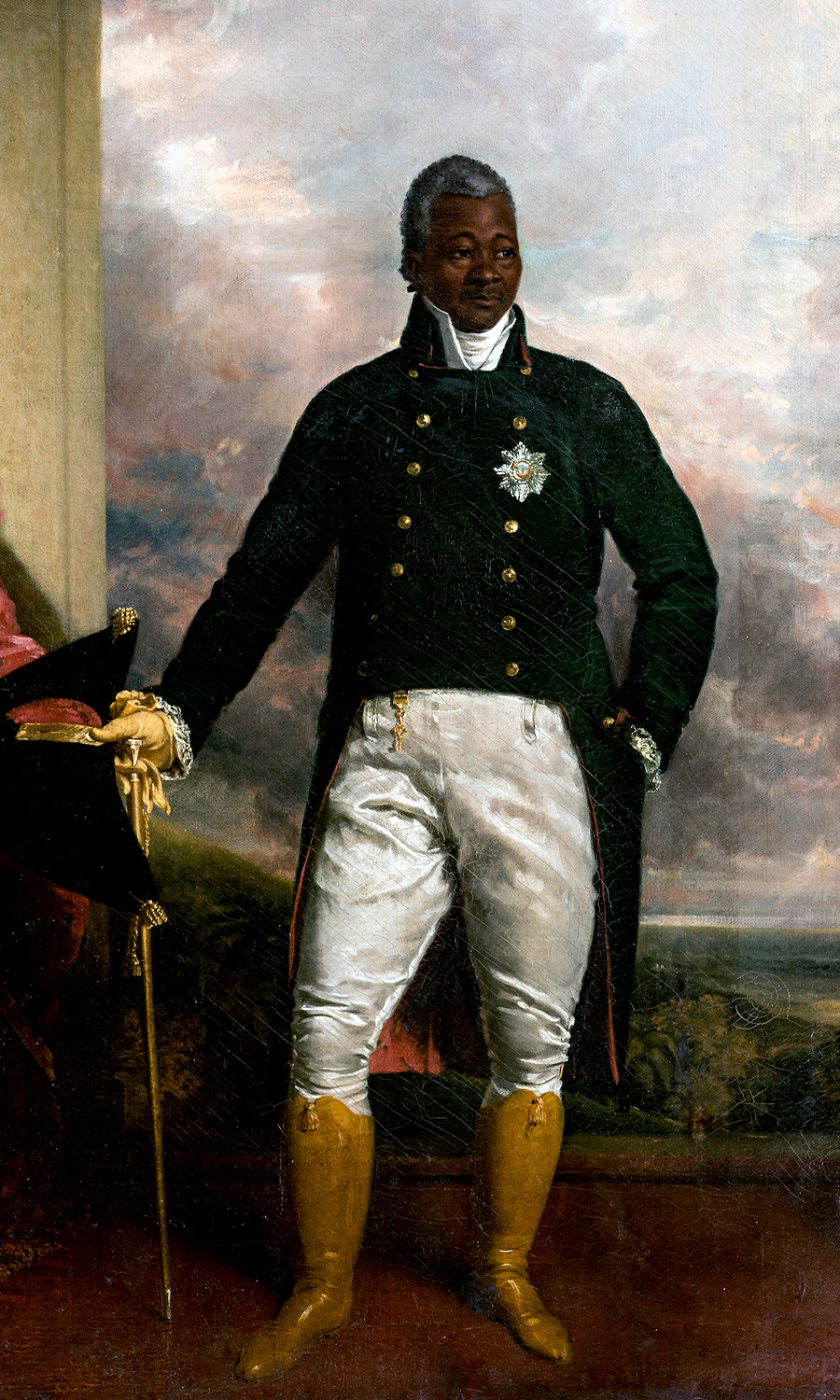
Henri Christophe
President, King, Nation Builder, and Defender of Haitian Independence
Henri Christophe (1767–1820) stands among the greatest architects of the Haitian nation. A brilliant military
commander, visionary statesman, and accomplished builder, he dedicated his life to protecting Haiti’s independence and laying the foundations of a strong, prosperous, and respected nation. His leadership helped ensure that the hard-won victory of the Haitian Revolution would endure for future generations.
Born into slavery in the French colony of Saint-Domingue (present-day Haiti), Henri Christophe experienced firsthand the injustice of slavery. Those experiences fueled his determination to fight for liberty and human dignity. When the Haitian Revolution began in 1791, he joined the struggle for freedom and quickly distinguished himself as a courageous soldier and gifted military leader.
Throughout the revolution, Christophe fought alongside General Toussaint Louverture, whose leadership transformed the revolutionary movement into a disciplined and formidable force. Under Toussaint’s command, Christophe developed exceptional military skills and became one of the Revolution’s most trusted generals.
Following the capture of Toussaint Louverture in 1802, Christophe remained steadfast in the fight for independence. Together with General Jean-Jacques Dessalines, Alexandre Pétion, Capois-La-Mort, and thousands of courageous Haitian soldiers, he helped lead the final campaign against Napoleon Bonaparte’s expeditionary army.
On November 18, 1803, Christophe played a significant role in the historic Battle of Vertières, the decisive victory that brought an end to French colonial rule and opened the way for Haiti’s declaration of independence on January 1, 1804.
Following the assassination of Emperor Jean-Jacques Dessalines in 1806, Haiti entered a period of political division. Christophe became President of the State of Haiti in the northern part of the country in 1807. Determined to strengthen the young nation, he focused on building stable institutions, improving agriculture, encouraging education, and developing the economy.
In 1811, believing that Haiti required a strong and stable system of government to preserve its independence, Christophe established the Kingdom of Haiti and was crowned King Henri I.
His reign is remembered not only for political leadership but also for extraordinary achievements in architecture, engineering, education, and national defense.
The Builder of a Nation
Henri Christophe believed that Haiti’s independence could only survive if the nation became economically strong, well educated, and capable of defending itself against foreign invasion.
Among his greatest accomplishments was the construction of the magnificent Citadelle Laferrière, one of the largest fortresses in the Americas and today a UNESCO World Heritage Site. Built high in Haiti’s northern mountains, the Citadelle was designed to protect the young nation from any attempt to restore colonial rule. Today, it remains one of the greatest engineering achievements in the Caribbean and a lasting symbol of Haitian sovereignty and resilience.
Christophe also commissioned the construction of the elegant Palais Sans-Souci, his royal residence in Milot. Often called the “Versailles of the Caribbean,” the palace reflected his vision of a proud, independent nation capable of creating institutions and cultural achievements equal to those of any country in the world.
Recognizing that education was essential to Haiti’s future, Christophe promoted the establishment of schools and encouraged professional training. He believed that an educated population would strengthen the nation and safeguard the ideals of the Revolution.
A Legacy of Leadership and Vision
Henri Christophe devoted his life to preserving the freedom won by the Haitian Revolution. His contributions extended beyond the battlefield into nation-building, public works, education, and economic development.
His enduring legacy reminds us that true independence requires more than military victory. It also demands strong institutions, investment in education, responsible leadership, and a commitment to national unity.
Today, the Citadelle Laferrière and the Palais Sans-Souci stand as enduring monuments to Christophe’s vision and determination. They continue to inspire visitors from around the world and symbolize Haiti’s remarkable contribution to world history.
The Legacy of Henri Christophe
Henri Christophe’s life continues to inspire generations through timeless values:
- Leadership through vision and responsibility
- Freedom protected by strength and preparedness
- Education as the foundation of national progress
- National pride rooted in culture and achievement
- Perseverance in the face of adversity
- Building institutions that serve future generations
His remarkable journey from enslavement to revolutionary general, president, king, and nation builder demonstrates the extraordinary potential of human determination and leadership.
Henri Christophe
President. King. Nation Builder. Defender of Haitian Independence.
“A Nation’s Freedom Must Be Protected by Its Strength, Unity, and Vision.”
1804 Heritage LLC
Preserving Haiti’s Legacy. Inspiring the World.